
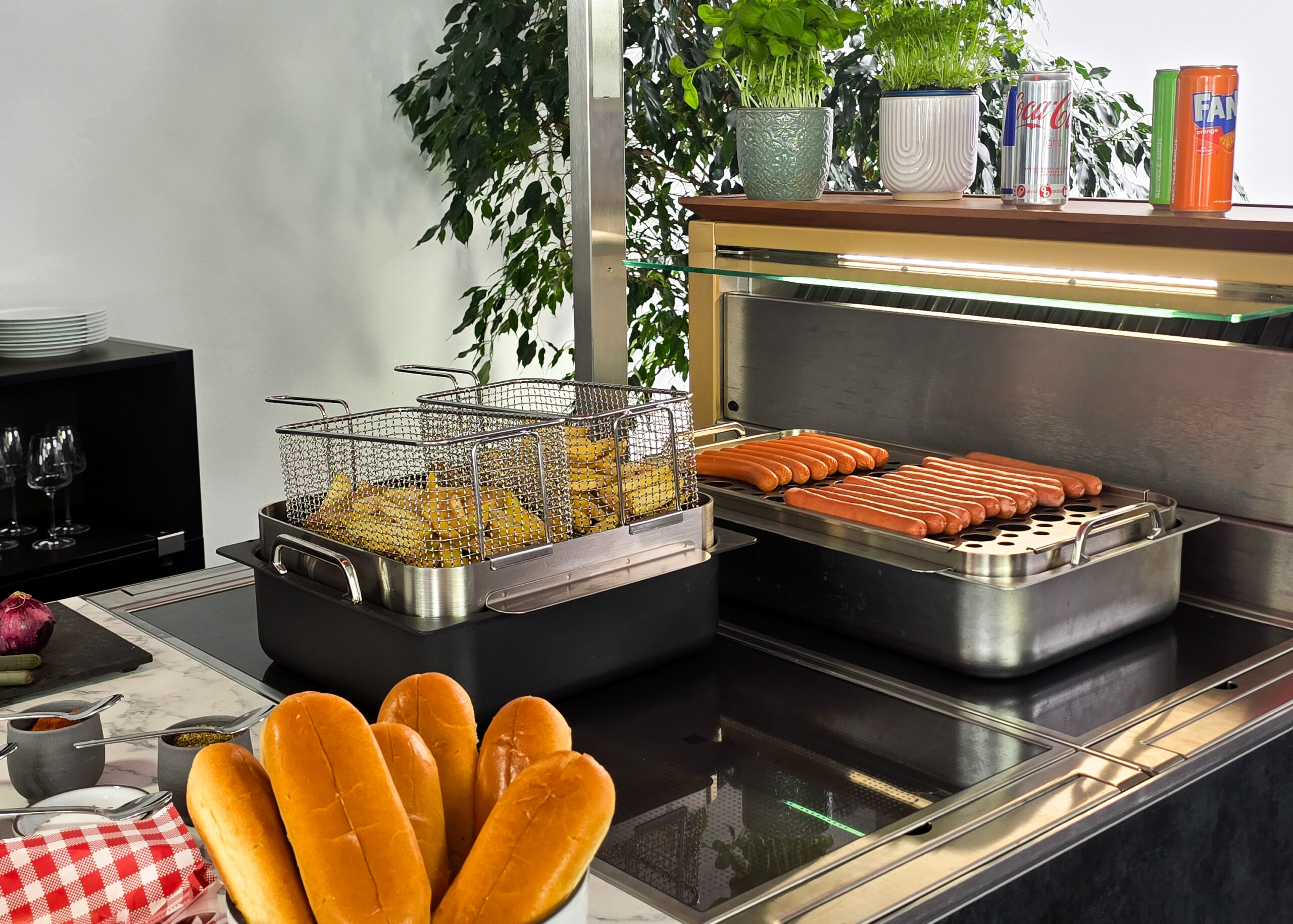
The lunch rush arrives all at once. Pasta needs three minutes, green beans need four, potatoes need six, and everything has to reach the guest at its own right moment. In most kitchens that means three vessels, three timers, and a cook watching all of them. The Multipot was built to answer that exact problem with a single pot.
The challenge of front cooking
A front cooking station has less room and less margin for error than a back kitchen. Every extra machine takes footprint, power, and cleaning time, and every format change in front of guests has to look effortless. The constraint is rarely whether a pot can cook a dish. It is whether one setup can carry a full menu through a shift without slowing the pass or crowding the counter.
Most kitchen equipment does one job. The Multipot is built around two capabilities far rarer than versatility, and together they change what a single pot can do in service.
One pot for three methods, water and oil
The first is range. The same Multipot boils, deep fries, and steams, across both water and oil. Filled with water, it cooks pasta, potatoes, eggs, and vegetables. Filled with oil, it turns out crisp french fries and wings. Set the steamer insert on top, and it steams dumplings, gyoza, spring rolls, and dim sum. One vessel covers methods that usually require separate machines, which is what lets a single station offer real variety without adding equipment behind it.
This matters most where space and spectacle both count. A cook can run burger with french fries at midday and a pasta concept in the afternoon from the same base, giving guests something to watch without the kitchen absorbing a second footprint for each format.
Different cook times, running at once
The second capability is the one that genuinely sets the Multipot apart. Inside the pot sit separate baskets, each holding a different food. Because every basket lifts independently, foods with different cook times can run in the same pot at the same time and each one comes out at its own moment. Pasta at three minutes, beans at four, potatoes at six, all in the same water, each pulled precisely when it is ready.
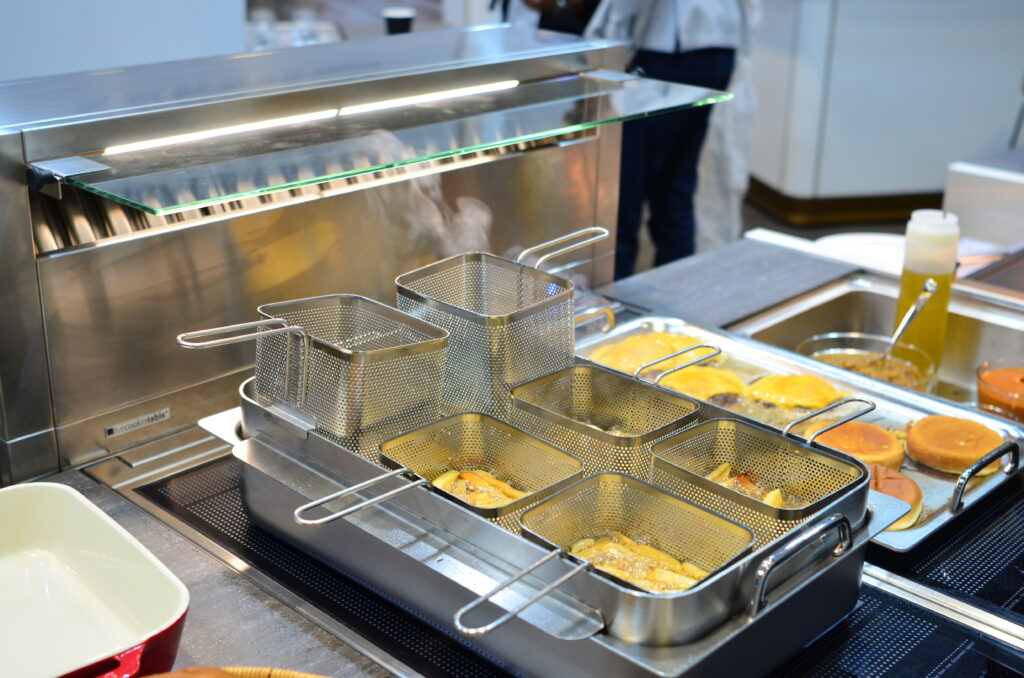
Ordinary multipurpose cookware cannot do this. A single pot of boiling water usually means one timing for everything in it. The basket system turns that limitation into parallel cooking, so a cook manages one pot instead of three and nothing overcooks while it waits for something slower. The foods never touch, either, so there is no flavor crossover between what shares the water.
For an operator, that translates into fewer machines at the station, less power draw, faster changeovers, and a cleaner counter, without giving up the range of a full menu.
Recognized by design
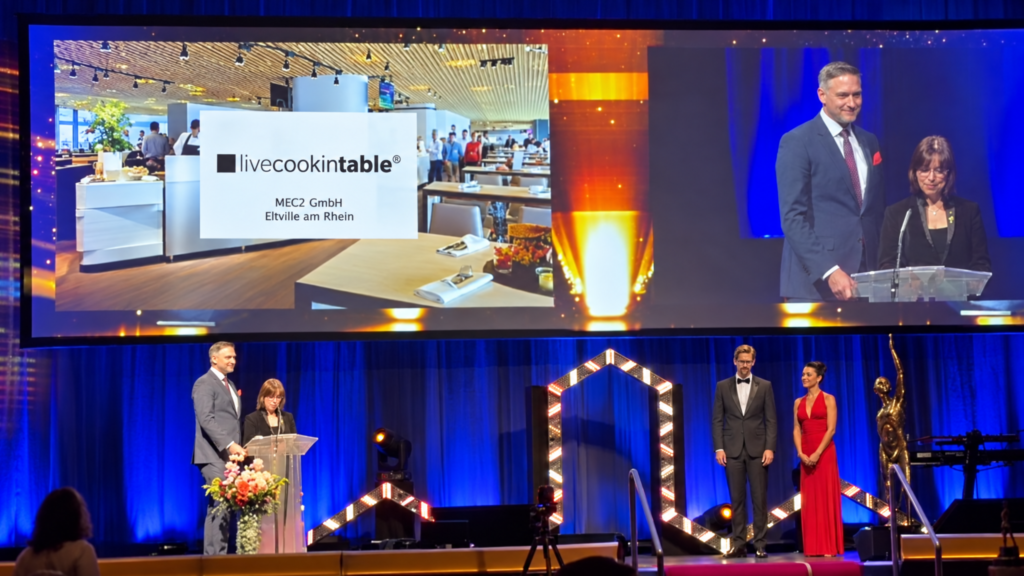
The design behind those fast, clean basket swaps won the Red Dot Award: Product Design 2018. The recognition points to what makes the Multipot work in practice: the geometry of the pot, the ring that holds the steamer insert and drains pasta and fried items, and baskets that lift clean and swap fast under the pressure of service.
Where the Multipot fits
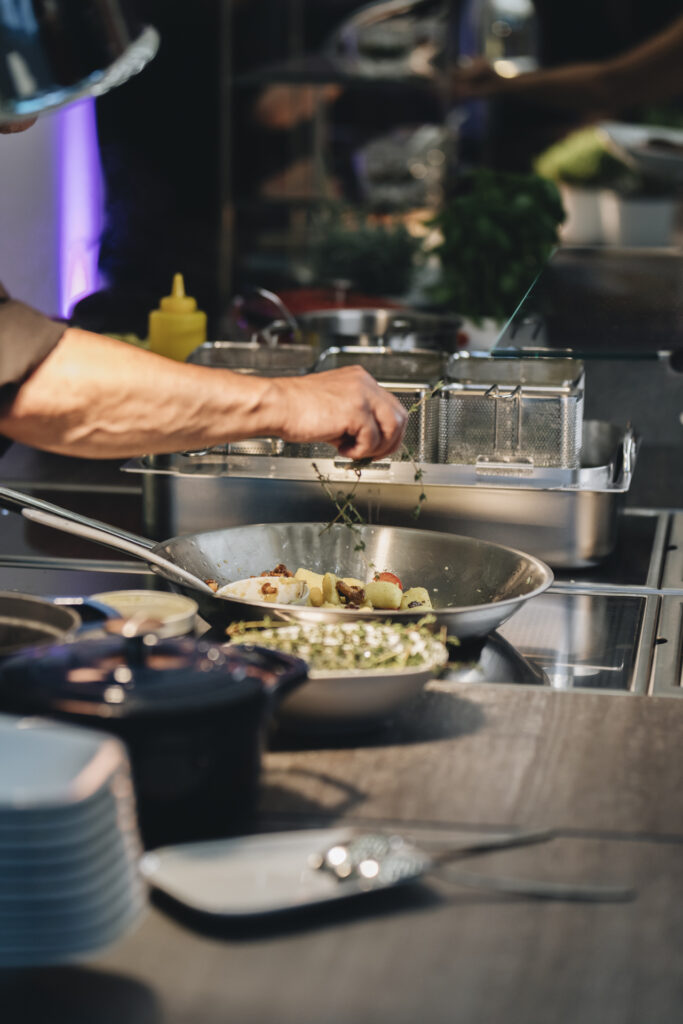
The Multipot works on induction, which means it fits wherever an induction surface does, from a back kitchen to a live-cooking station. On a livecookintable® station it turns a single counter into a place that can boil, deep fry, and steam in front of guests.
So the question before your next event is a practical one. How many separate machines is your station running that one pot could replace, and how much of your counter would you get back if it did?
Whether you would like to learn more about our products, request a personalized consultation, or are simply curious about the solutions we can develop for you: we are here for you.

Did you enjoy this Blog? Share it with your Network.